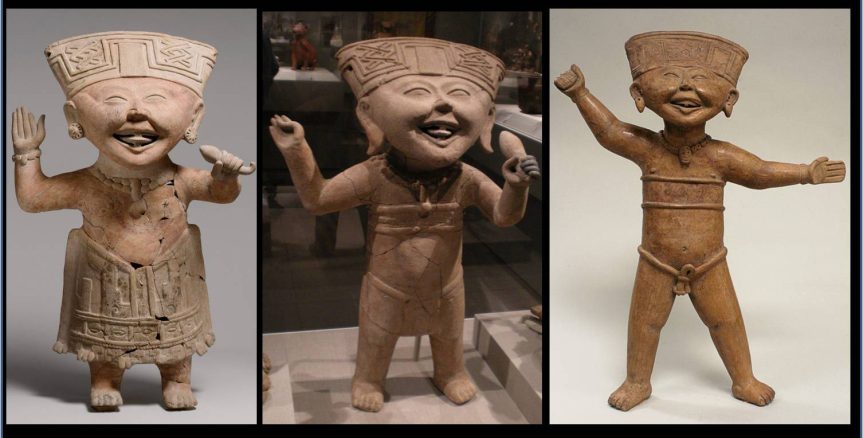
“The tribesmen and women gathered around awaiting the moment to mark her position as a remarried woman into their tribe. She gulped down the liquid given by the healer – painfully surprised by its intense burn – squeezing her knuckles into the cool dirt beneath her. The healer placed his heavy, sharpened tool just above one of her four pointed teeth and in complete silence, with a deep breath, he threw his first blow.”
Imagine a world where your smile is your unique ID. From a teenager’s right of passage, to a source of intimidation by being filed to imitate a piranha’s fangs, to a monetary exchange by the tooth fairy; our teeth continue to have an aesthetic stronghold in our society.
Armed with their worldly knowledge at the time, our ancestors relied heavily on their customs to provide structure to their society. Broadly, customs around all continents had some common goals :
- Identify the status of a person in the tribe
- Impress a Deity to avoid his wrath, meaning disease, natural disasters, untimely deaths of loved ones etc.
- Display wealth and power
- Allow the deceased to pass over to the afterlife in relative comfort.
Some customs were an amalgamation of science and medicine based on the ancients’ observation of celestial movements, the healing properties of plants and so on. The following is a glimpse of the role our teeth have played as a part of the rituals of our species’ short history on earth.
ASIA
India and Pakistan region: One of the oldest proof of dentistry being practiced by our ancestors was found in a 7,500 – 9,500 year old human specimen with cavity-filled molars. With nearly equal widths and concentric ridges, these cavities hinted towards the use of a manual drill to reach a certain depth and shape avoiding damage to the dental pulp. We can only guess how far back our knowledge of the human anatomy stretched.
Japan – Prehistoric Japanese people (the Jomon Period: 14000 – 300 BCE), extracted healthy teeth to identify the status of a person. For instance, missing two upper front teeth signified the ‘coming of age’; four absent lower front teeth signified a person of high prestige, all canines and lower two front teeth indicated remarriage and some missing teeth are speculated to even have identified immigrants.

Japanese people also started blackening their teeth ( a ritual called Ohaguro) to signify that they were married. It got so common that the Chinese people called them the ‘black teeth people.’
Indonesia – Balinese people, who are predominantly Hindus, believe that canine teeth are necessary for savage animals but not for humans. In a ritual practiced even today, they file down the canines to be less pointed as a right of passage to identify a calm, peaceful soul devoid of any aggressive animal instincts.
However, in other parts of Indonesia such as Sumatra, the Mentawai people did the opposite: sharpening all their front teeth to make them pointed as a sign of beauty. Indonesians also blackened their teeth to signify sexual maturity or marriage.
The middle East: A considerable amount of medical and dental inventions took place during the period of the Persian Empire that overlapped with Europe’s dark ages. With Islam’s emphasis on maintenance of good personal hygiene, the middle eastern doctors realized that dental plaque was responsible for bad breath, gum disease and eventual tooth loss. Consequently, they discovered various instruments and methods to scrape off the plaque deposits and maintain a clean oral cavity – a knowledge that traveled far along the empire’s vast borders.
Malaysia : The Borneo tribes, even today, practice teeth blackening but for different reasons. They view white teeth as a characteristic of animals and the European populations, so after etching their teeth with ginger, they apply a paste made from burnt coconut shells and oils to blacken them. To beautify their smiles, they cover the front teeth with brass crowns which seems to be an earlier form of what our celebrities fashion today as Grills.
NORTH AMERICA
The most modern form of dental alterations is by the introduction of dental tattoos and jewelry. Dental tattoos are most exclusively made for people receiving any kind of a crown or denture where preferred images are inserted at the fabrication level on to the dental prosthesis. These can’t be done directly on healthy teeth.

Dental jewelry, however, can either include tiny diamonds cemented directly onto the front teeth or in the form of dental Grills, popularized by the hip-hop culture, as a display of wealth. Grills are removable appliances made with precious metals to be put on the front teeth.
SOUTH AMERICA
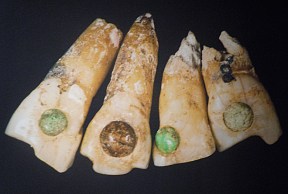
The Mayan civilization were the first to introduce dental jewelry. Using what could be the earliest known dental cements, they attached colorful stones to the front teeth to indicate prestige. The green color of stones like Jade represented growth and prosperity in their culture.
The tribes of the Amazon had people with preference for more aggressive displays. They filed down their teeth to mere points to imitate a piranha fish which was greatly feared and thus served a great source of intimidation.
AFRICA
South Africa – Certain areas still practice tooth ablations as a right of passage for teenagers where the lower two front teeth are most commonly removed. It also serves a more practical purpose in certain tribes where missing teeth are an entrance-way for feeding the person in case he would suffer from Tetanus.
Cameroon, Congo, Guinea, Zaire, Uganda : The tribes sharpened their teeth to imitate those of a crocodile by a practice named Akuha.
A widely held belief up until today in certain areas of Africa, is that of the tooth-worm. It is believed that the tooth-worm is responsible for diarrhea leading to the bizarre ritual of extracting the newly erupted lower canines of infants to ward off the potential for this disease to occur. As brutal as it may seem, it was merely an attempt to save their children’s lives, with disease as the foremost cause of mortality. The reason for choosing this method might come from the cows that our ancestors reared who lacked canines and never seemed to get sick. Animals have been inspirations for many rituals over time.
EUROPE
Babylonia: Speaking of tooth-worms, the earliest recorded history of this surprisingly prevalent world-wide belief was found in Babylonia on a Sumerian clay tablet engraved with a poem, an extract of which reads:
The worm went weeping, before Shamash,
His tears flowing before Ea:
“What wilt thou give me for my food?
What wilt thou give me for my sucking?”
“I shall give thee the ripe fig and the apricot.”
“Of what use are they to me, the ripe fig and the apricot?
Lift me up and among the teeth
And the gums cause me to dwell!
It’s believed that the concept of the tooth worm might have arisen when the ancients’ peeped into the pulp of a tooth to find the nerves resembling worms. Desperate to rid their patient of it, they formulated a technique to ‘smoke-out’ these worms using nenbane seeds in beeswax – deadening the nerves in the process – resulting in cessation of the tooth pain. Voila! – a myth is born.
As a dentist myself, I got to witness this myth during my practice in India. The Hindi term for caries is keeda meaning ‘worm’. For a lack of better terminology, it was the only way to explain to the rural population that they had carious teeth; not to mention the horrified expressions from the pediatric patients who vividly imagined actual worms squirming in their teeth. An extra few minutes had to be dedicated to explain to them the reality of things in hope that they would educate their next generation of this being a myth. Educating the adult population, however, was an entirely new ordeal which leads me to my next story.
My grandmother told me how once while travelling in a local bus, she got to witness a dental quack in action. Dental quacks are an uncomfortable melange of the ancient tribal healers (using popular regional mythical beliefs) and professional dentists ( by displaying actual dental instruments on their work space i.e. a large bed sheet on the road-side); to form the persona of a confident but painfully unqualified doctor. She told me how he hopped on to the bus and gathered everybody’s attention to artistically display a glass jar with actual worms claiming it to be a souvenir of his successful tooth extractions. After advertising some home-made toothpastes and powders, he ended his presentation by distributing his business card and even selling his magical dental concoction to certain curious passengers. I guess confidence has nothing to do with education in some cases.
Slovenia : A 6,500 year old tooth specimen was found in Slovenia with a tooth cavity filled with beeswax.
France : In 1210, the Guild of Barbers was established that gave barbers the right to carry out tooth extractions and reserved more surgical procedures for the medical surgeons. Ivory also started to be used to fabricate artificial teeth prosthesis for its white color ( which did turn yellowish fairly quickly).
Rome : Around 50 AD, Roman doctors had a genuine understanding of the dental anatomy. Tooth extraction were only seen to be a last resort and carious teeth were treated by their cavities being filled with lead or linen to try and control its cause. Malposed teeth were also routinely fixed with wires.
England:

One of the oldest proofs of dental rituals practiced in Europe was found in a mass grave of Viking warriors in Dorset, England. Most of these remains contained teeth with horizontal marks made by skilled hands. It probably signified a social identity or a badge of honor for the number of battles won but since hints of dark pigments were found in some samples, it could have been an intimidation tactic to those they attacked.
Our smile depicts a part of our identity and millions are spent on dental treatments or beautification world-wide. As brutal as some of these rituals may seem, it does ask for thought about the necessity of a social identity. If any kind of body modification helps some gain a better self-esteem and position in society, then perhaps it was worth it.
References
 Dental Yoda