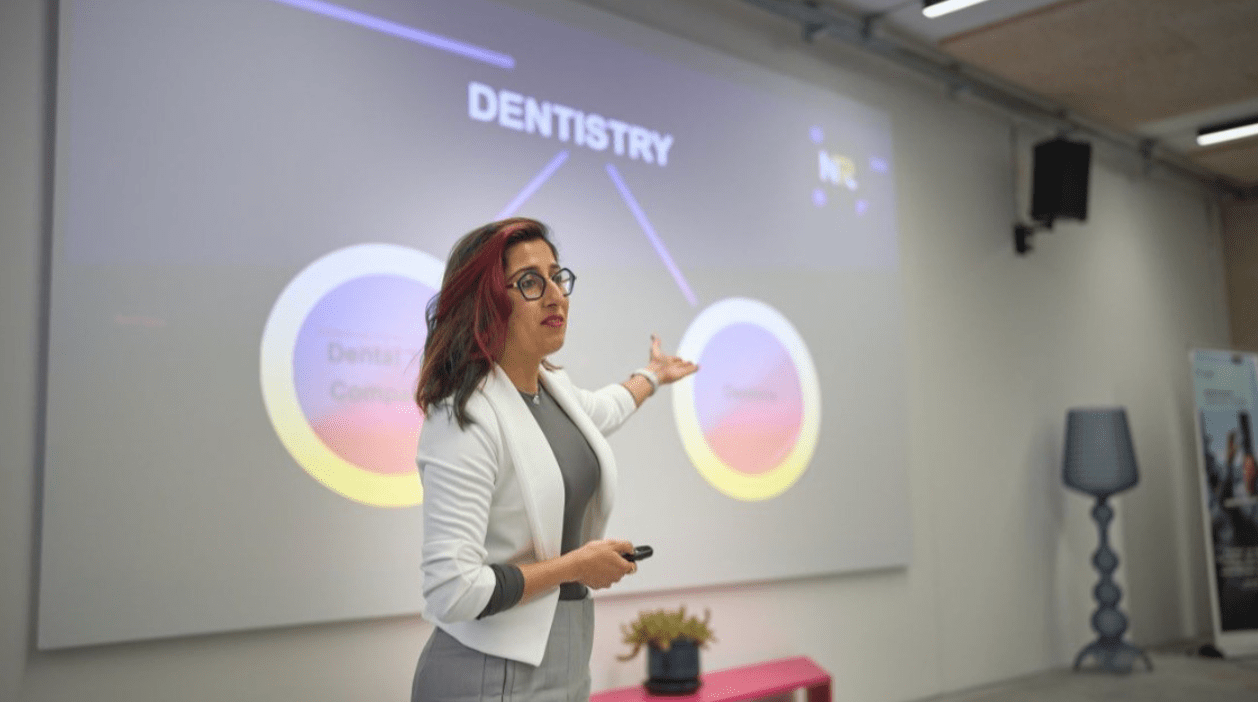
When it comes to dentistry, there are two distinct worlds: the perception of the profession and its ground reality.
The Backstory
Thanks to my father’s job, I grew up traveling the world, living in both developed and developing nations—not as a tourist but as a local.
When you live with different people, in different places, with different cultures, and different skin colours – you learn how similar everything and everyone actually is.
In one part of the world, I saw women confidently working as street vendors, bus conducters, or selling ice creams—some even with missing teeth but radiant smiles. In another, women faced unspeakable dangers for simply choosing to take a public bus slightly later in the evening.
You see, wherever you live, across the world, every nation believes that they’re having it the worst. And I don’t blame them. As a 16 year old, my curiosity was deepening.
When I revisited some places 10-15 years later, one nation that boasted a growing economy with both men and women engaging in economic activities, had shifted toward conservatism, with women now veiled from head to toe, with a very different government to what I had experienced. Meanwhile, the developed nation I once lived in seemed frozen in time, unchanging after 15 years.
My conclusion? Developed nations evolve slowly, while developing ones are in constant flux.
Across the world, I noticed recurring patterns in human behavior:
- People hate war but celebrate its warriors.
- People want systemic change from the governemnt, but hesitate to voice simple concerns in their immediate surroundings & work.
- People chase corporate success while loathing its personal costs
- People rush to gather educational debt, own a house and car while loathing increasing taxes and inflation.
The unifying theme? Ego, public perception, and money took precedence over love, kindness, and respect.
My Introduction to Dentistry
Dentistry found me when I was an 18-year-old fascinated by art, sculpture, and biology. Although I didn’t qualify for medicine, dentistry became my next best choice, combining my interests into a fulfilling career.
I began my journey in India, practicing in high-intake government hospitals by day and a private clinic in a posh New Delhi neighborhood by evening. I volunteered in rural areas and even treated a cardiac surgeon recovering from a heart attack, right at his bedside.
Moving to Europe brought a cultural shock—a slower pace, stark contrasts in practice styles, and a belief among some local dentists that their challenges were uniquely insurmountable.
Dentistry: A Tale of Two Economies
Dentistry is just another profession – yet it’s different in its public perception. An average dental practitioner is going through all the regular emotions of any day-to-day person. The difference is that in most places globally, it’s an individualistic profession. A dentist, with their own clinical practice, is already a leader in their own space, managing patient treatment, staff and the daily ups and downs of family life and work.
Dentistry, also mirrors the societies it serves. In developing countries, dentists face financial instability due to overcrowding in the profession, driven by societal pressure to chase prestige. Competition has now forced below average salaries, often below sustainable levels. Education debt mounts as, private colleges capitalize on this demand. It trickles to societal trends of wanting your offspring to be in a “respectable” profession.
When billions of people want the same 2-3 things, too many people become those 2-3 things – all in the hopes of creating a positive public perception of themselves and their families, even at the cost of financial constraints & related stresses. There’s no more discussions on minimum wage, when a people are ridiculed for standing up and asking for their rights to their local authorities and governments
“Making noise is almost forbidden in the most populous, noisiest nations of the world.”
In contrast, developed countries suffer a shortage of dentists. Strict regulations and insular policies limit competition, keeping salaries high but innovation slow. Dental companies cater predominantly to these wealthy practitioners, sidelining the needs of developing markets under the guise of “there’s no product market fit”.
The aftermath
There are a lot of dentists in developed countries who want more options and price variety but they seldom get access to these products. That’s because
(1) Regulations are strict on for market access. It’s an expensive & time-consuming ordeal
(2) The big players are already too well spread within the spaces and too big to be knocked out by an external competitor
The monopoly is clear on who owns the space and dentists go through their entire practicing years, working with products that were made specifically for them, with very little experience of the fact that they could’ve achieved the same results, and saved themselves a whole lot more money, had they tried cheaper options with comparable effectiveness. They never get a chance to access to them.
Simultaneously, in developing countries, an average dentist can never fathom affording popular dental products that they get to see in conferences and workshops. They succumb to the cheaper options, even using products off label just to make financial sense for their clinical practice.
But zoom out and here’s the commonality that I observed in both parts of the world when it comes to dentistry.
Every dentist who attends to patients eventually hits a point where they transition into Robot-mode. They stop feeling love for a profession that once promised so much to them. Debts are high. Families get impacted and burnouts start happening. People either drop out of the profession entirely out of frustration, or worst-case, they commit suicide (just google “profession with highest suicide rates”).
“When Love is lost – the true problem arises“
Dental Product Company Pain Points
The pain points that dental product companies face are threefold:
- Research and Development Teams Lack Access to Clinicians: What if I told you that the dental products that dentists use on you, during your dental visit, barely had any clinicians involved during development? Research and development teams in dental companies rarely get access to sufficient clinicians to vet their product ideas. The current approach involves reaching out to 2–3 local Key Opinion Leaders (KOLs) to understand the needs of a global market.
However, KOLs often have a vested interest in the business, which can bias their opinions. This means that even if a team has a poor product idea, the KOL might promise to make it work. No one openly states that there’s no market need for the product. The truth is that R&D teams need honest, raw, unbiased feedback as early as possible in the development process. The reason teams rely on the opinions of just 2–3 KOLs is that there’s no easy solution available to help them get access to many clinicians and extract honest, raw feedback from them.
In additon, these engineers are self-taught on the basics of the dental know-how that they need to do their jobs properly and rely on the same KOLs to explain, in a few minutes, “how things work on the clinical end.” Dentistry is a field where each practitioner has broad leeway in deciding their own unique practice style. You can see the issue when only 2–3 local clinicians’ opinions are taken into account—it’s heavily biased. This limited understanding of “how things work” leads to my second pain point with dental companies.
2. Lack of Training for Personnel in Dental Jargon and Product Development: Personnel are not adequately trained in dental jargon or equipped to do their jobs effectively. It’s not a priority for dental companies to train their staff, as most resources are spent on attracting a handful of KOLs to test their ideas even before they’re fully developed, hoping the KOL will become an early adopter and promotor. Companies also focus on attracting large dental chains (DSOs) to adopt their ideas “immediately,” hoping to maintain a steady cash flow.
For the employees in the companies doing the actual work, there is no clear “North Star” guiding why they’re dedicating significant portions of their youth to developing dental products. This brings me to the third pain point.
3. No Defined North Star to Drive a Healthy Dental Product Company As a female founder and Board member in corporate spaces, I must point out: when too many men occupy decision-making spaces, competition often becomes the primary focus. It’s almost a genetic need of men sometimes with a hidden undertone of “going to war,” mindset.
Predominantly male teams lead to executive decisions often made from a place of “being better than the other guy,” “showing superiority,” “being quicker,” or “killing the competition,” while neglecting the day-to-day issues voiced by employees trying to do their jobs.
The aftermath is that employees accept these conditions and move from paycheck to paycheck, following instructions with little motivation to contribute ideas. For them, there is no longer a metaphorical table for collaboration—it’s an endless pit. They ask, “What North Star? What does that even mean? Why is it needed?”
A personal note: Bringing women into these heavily biased male spaces allows balance into the equation. Just to be clear, I don’t see it as a gender related issue, rather an “energy” related issue.
Masculine energy wants to compete and grow fast. Feminine energy wants to ensure that the environment is set up to thrive and is safe for growth to occur. I’ve seen many female executives who drive from masculine energy, and many male executives who’re leading with feminine energy and associated values.
The need is to address the gap which is unbalanced conversations and resulting actions.
If people keep voicing problems and share ideas to solve them, but nothing gets implemented, then this is not respectful to our fellow colleague who’s consistently voicing it. People lose hope in leadership where there was never a North Star to work towards in the first place as a single, unified team.
Dental Clinicians’ Pain Points
1.Dentists Are Dissatisfied with Their Jobs Dentists report high levels of job dissatisfaction. Google shows that dentists have one of the highest suicide rates, along with doctors, though clear statistics on this are lacking. It remains a profession plagued by bore-out, burnout, and dropout at alarming rates.
2. Dentists Lack Financial Security Contrary to popular belief, not all dentists are millionaires. No matter how mice their clinic is, they’ve taken on massive debts. Many dentists are burdened by education debt or are severly underpaid, depending on their geographic location of clinical practice globally. Dentists need alternative revenue channels to sustain themselves and find fulfilment.
3.Dentists Are Not Trained in Medical Product Development Many dentists aspire to become Key Opinion Leaders, support R&D teams, move over to corporate full time or invest in the Medtech space. However, they often lack training in how devices are developed, directly impacting the quality of advice & service they provide to companies. Let alone, the challenge of figuring out corporate recruitment, designing corporate level CVs and related interveiw processes. Dentists only know how devices are USED, but not how they’re MADE. They also are taught nothing about business.
In my opinion, dentists need to work on their career and not just assume that clinical work is the only space that they can make a living from. Having said that, there are barely any methodical solutions to help teach them the skills that they need to make a robust career path. Dentists can earn from part time and full time support, for example, in the dental device industry. Which brings me to my 3 tier solution to all the pain points listed above.
My Three-Tier Solution
Tier 1: I’ve created the first marketplace platform connecting dental companies to a global pool of dental practitioners. I developed the Global Dentists’ Pool® (Google it) for this purpose. Companies can find clinicians to provide raw, honest feedback or can access specialized dental profiles for regulatory, clinical, marketing, or sales needs. Hiring a dentist who is also a Medtech specialist saves time and money. The platform’s vision is similar to Upwork or Fiverr, with the key difference being that we vet dental professionals by providing high-end training (which leads to Tier 2) and therfore the end result is somewhat guaranteed to the purchaser.
Tier 2: I’ve designed a unique program for dentists that teaches the ins and outs of the medical device industry & corporate life. I created the Premium Dental Advisor Program (Google it) to teach dentists the fundamentals of Medtech, corporate readiness, and career expansion into dental tech companies. This program allows dentists to open alternative revenue channels by either taking on part time projects, as part of the Global Dentists’ Pool, or full time roles in dental product companies. The hope is to avoid practitioners reaching a state of extreme frustation and leaving the profession entirely due to bore-out, burnout and resulting drop out.
Tier 3: Launch a consulting firm for DenTech led by dentists. The best performers from the Premium Dental Advisors Program will be hired by my company, NamNR Pro (which stands for Namrata’s Neat Resources for Professionals—cheesy, I know, but I love it!).
For the first time, dental companies can access specialized consultants & 150+ clinicians across 25 countries. NamNR Pro is already functioning as a consulting firm, working with dental companies willing to test their ideas and get genuine feedback. My clients understand the value of hiring talented dentists and premium dental advisors, and I’m grateful to drive this change. We’ve supported companies by:
1. Running surveys for them, in their chosen geographic locations and chosen dental speciality (the Pool both general practioners and specialists from all fields)
2. Supplying specialized profiles (Premium Dental Advisors) for marketing projects – from copywriting to developing compelling stories that the end user wants to hear (because the Advisor is a dentist themselves and know what will click and what won’t)
3. Supplying Regulatory writers who are also dentists, and saving time and money by provinding submission ready regulatory documents, written and signed by a dentist complying with MDR and FDA profile needs of experience level.
4. Offering KOLs and early adopters based on company need.
Join the Movement
Dentists and dental companies, are both welcome to participate in this movement and make change happen for themselves.
This is the first time and both sides are being offered practical solutions to festering day-to-day issues that are often ignored and then addressed when its too late.
“Gandhi said – Be the change you wish to see in the world. I said – Ok, Consider It Done”
- Email me: namrata@namnrpro.org
- Explore the Program: Premium Dental Advisor Program
- Explore the Global Dentists Pool: Global Dentists’ Pool
- Consult with us: Schedule a Call
Dr Namrata Upadhyay
Author Profile

Dr Namrata Upadhyay is a dental surgeon and Founder & CEO of NamNR Pro – The Global Dentists’ Pool®. She is a clinician, ex-executive to dental startups, Board advisor course instructor, speaker and MedTech consultant for all risk classes of medical devices. She is also the Co-chair of the Medical device special interest group under in the European Medical Writers Association. She now leads change in the Business of smiles through her 2 initiatives via her company NamNR Pro namely the Global Dentists’ Pool and the Premium Dental Advisor Program. You can reach out to her at namrata@namnrpro.org
 Dental Yoda